
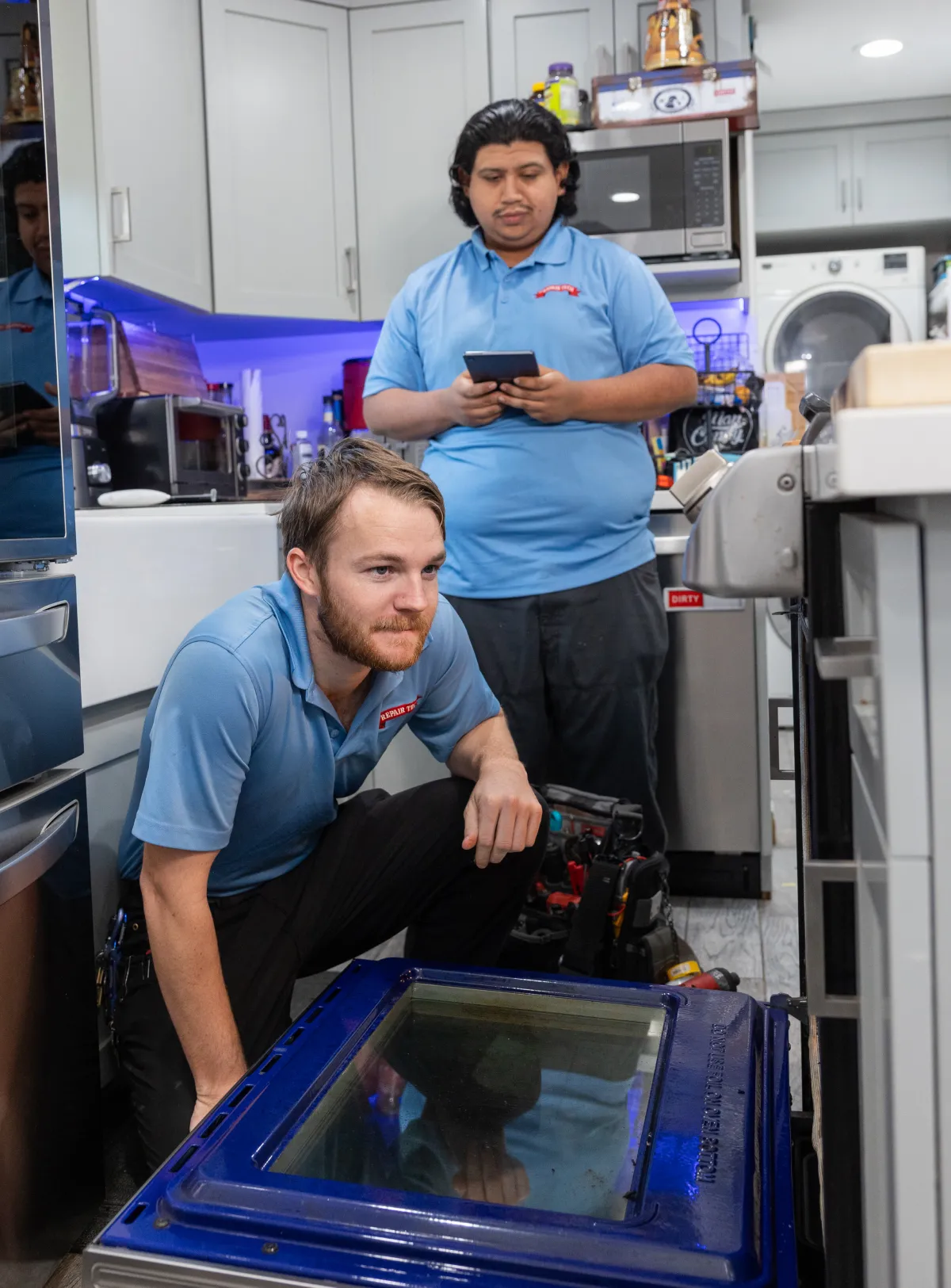
There’s nothing quite like preparing a meal, setting the oven timer, and discovering your food isn’t cooking the way it should. Maybe your cookies are browning unevenly. Maybe your casserole takes longer than usual. Or maybe your oven says it’s preheated, but the food inside is still undercooked.
If your oven isn’t heating properly, it doesn’t necessarily mean you need a new appliance. Several common issues can affect how an oven heats, and some are surprisingly simple to check.
Before your next big family dinner, here are seven things worth looking into.
7 Things to Check When Your Oven Isn’t Heating Properly
1. Check Your Oven’s Temperature Accuracy
Just because your oven says it’s set to 350°F doesn’t mean the temperature inside is exactly 350°F. Ovens naturally cycle above and below their set temperature to maintain an average cooking temperature. However, if yours consistently runs too hot or too cold, it could affect your results.
An oven-safe thermometer can help you identify potential temperature differences. Place the thermometer near the center of the oven, follow its instructions, and compare readings over several heating cycles rather than relying on one measurement.
The Repair Tech Tip: If recipes consistently take longer than expected or food cooks unevenly, note the temperature setting and cooking time. Those details can help a technician diagnose the issue.
2. Inspect the Oven Door Seal
Your oven relies on a properly closing door to retain heat. If the door gasket is damaged, loose, or worn, heat may escape while the oven is running. Look for visible damage around the gasket when the oven is completely cool.
You might also notice:
- Longer cooking times
- Uneven baking results
- A door that doesn’t close properly
- A visibly loose or damaged gasket
If the seal needs replacement, make sure the replacement is appropriate for your oven model.
3. Avoid Opening the Oven Door Too Often
We get it. When something delicious is baking, it’s tempting to check on it every few minutes. But repeatedly opening the oven door allows heat to escape, which can extend cooking time and affect baking consistency. Use the oven light and window whenever possible. For dishes that require checking or rotating, try to keep the door open only as long as necessary. This small habit can make a noticeable difference during busy holiday cooking.
4. Check Your Oven Rack Placement
Sometimes, the problem isn’t the oven itself. It’s where the food is positioned. Placing a baking dish too close to a heating element can cause the top or bottom to cook faster than the rest. For many recipes, the middle rack provides more balanced heat exposure. Always follow the recipe and your oven manufacturer’s recommendations for rack placement. If you’re baking multiple dishes at once, leave enough room for hot air to circulate.
5. Make Sure Air Can Circulate Around Your Food
An overcrowded oven can make it harder for heat to move evenly around baking dishes. This is especially common during the holidays, when you’re trying to cook several dishes at the same time. Large pans, tightly packed racks, and dishes placed too close together may contribute to uneven results. Try spacing out baking dishes and cooking in batches when necessary.
For convection ovens, follow the manufacturer’s recommendations for rack positions and pan spacing.
6. Look for Signs of a Heating Element Problem
Electric ovens commonly use heating elements to produce heat. If an element isn’t functioning correctly, you may notice that the oven heats slowly, doesn’t reach the desired temperature, or cooks food unevenly. With the oven turned off and completely cool, you can visually inspect any exposed heating element for obvious damage, such as blistering or breaks.
Do not touch, remove, or attempt to repair electrical components yourself. A heating element problem should be diagnosed and repaired by a qualified technician.
7. Pay Attention to Ignition Problems in Gas Ovens
If you have a gas oven, an ignition issue can prevent the appliance from heating properly.
Possible symptoms include:
- The oven fails to heat
- The oven takes unusually long to ignite
- The temperature doesn’t rise as expected
- Ignition behavior changes from what is normal for your appliance
Gas oven components require special care. If you suspect an ignition problem, avoid attempting repairs yourself.
Important: If you smell gas, do not operate electrical switches, use flames, or attempt to troubleshoot the oven. Leave the area and contact your gas utility or emergency services from a safe location.
Why Does My Oven Heat Unevenly?
Uneven oven heating is a common complaint, especially when you’re baking something that requires consistent temperatures.
Several factors can contribute, including:
- Incorrect rack placement
- Overcrowded baking dishes
- A damaged door seal
- Temperature sensor or thermostat problems
- A malfunctioning heating element
- Convection fan issues on applicable models
If you’ve adjusted your cooking habits and your oven continues to heat unevenly, there may be an underlying component problem. Professional diagnosis can help determine whether a repair is needed.
When to Call for Professional Oven Repair in San Diego
An oven that isn’t heating properly can turn everyday cooking into a frustrating experience. While adjusting rack placement, checking the door seal, and monitoring temperatures may help with minor issues, persistent heating problems can point to components that require professional attention. If your oven takes too long to preheat, won’t reach the desired temperature, or consistently cooks food unevenly, it’s worth having it inspected.
At The Repair Tech, we help San Diego homeowners diagnose appliance problems and understand their repair options. Whether you’re preparing weeknight dinners or getting ready to host family for the holidays, a properly functioning oven can make your kitchen routine much easier.
Frequently Asked Questions About Oven Heating Problems
Why is my oven on but not heating up?
An oven may turn on without heating because of a faulty heating element, ignition problem, temperature control issue, or another component malfunction. A technician can identify the cause.
Why does my oven take so long to preheat?
Preheat time varies by oven model and temperature setting. If your oven suddenly takes much longer than usual, possible causes include heating component problems, temperature sensor issues, or heat loss through a damaged door seal.
Why does my oven cook food unevenly?
Uneven cooking may be related to rack placement, crowded pans, airflow restrictions, door-seal damage, or a malfunctioning heating component.
How can I tell if my oven temperature is inaccurate?
Use an oven-safe thermometer and observe readings over multiple heating cycles. A single reading may not represent the oven’s average temperature.
Is it worth repairing an oven that doesn’t heat properly?
That depends on the oven’s age, condition, repair cost, and the specific problem. A professional diagnosis can help you decide whether repair or replacement makes more sense.
Our team serves homeowners throughout San Diego with professional appliance repair and straightforward recommendations.
Schedule Oven Repair With The Repair Tech
Call: (858) 863-7319